DeWalt 6 Gallon Poly Wet/Dry Vac vs Stanley 6 Gallon 4 MAX HP Pro Wet/Dry Vacuum
Quick take: The Stanley 6 Gallon 4 MAX HP Pro Wet/Dry Vacuum costs $53 less.
Which one to buy
Identical on the sticker: $75, 6 gallons, 4 peak HP, casters and a rear blower port. The differences sit in the fine print. The DeWalt 6 Gallon Poly carries a 3-year limited warranty plus a year of free service and a washable, reusable cartridge filter; the Stanley 6 Gallon 4 MAX HP Pro carries 1 year and a foam filter whose washability Stanley doesn't specify. DeWalt also publishes a weight, 14.8 lbs, and 80 CFM, where Stanley publishes neither weight nor a consistent CFM figure.
DeWalt owners describe respectable everyday suction for workshop debris, wet cleanup and car detailing, while saying it is not the most powerful shop vac and that the poly tank lacks the toughness of DeWalt's steel models. Their sharpest warning is never to run it without the filter in place, and some point to Ridgid's lifetime warranty as something DeWalt doesn't match.
Owners have said little about the Stanley, so its case rests on wide availability at Home Depot, Walmart and Best Buy rather than on any feature the DeWalt lacks.
At the same price, buy the DeWalt. The longer warranty and reusable filter are worth having when the rest of the spec sheet is a tie, and the Stanley offers nothing the DeWalt lacks.
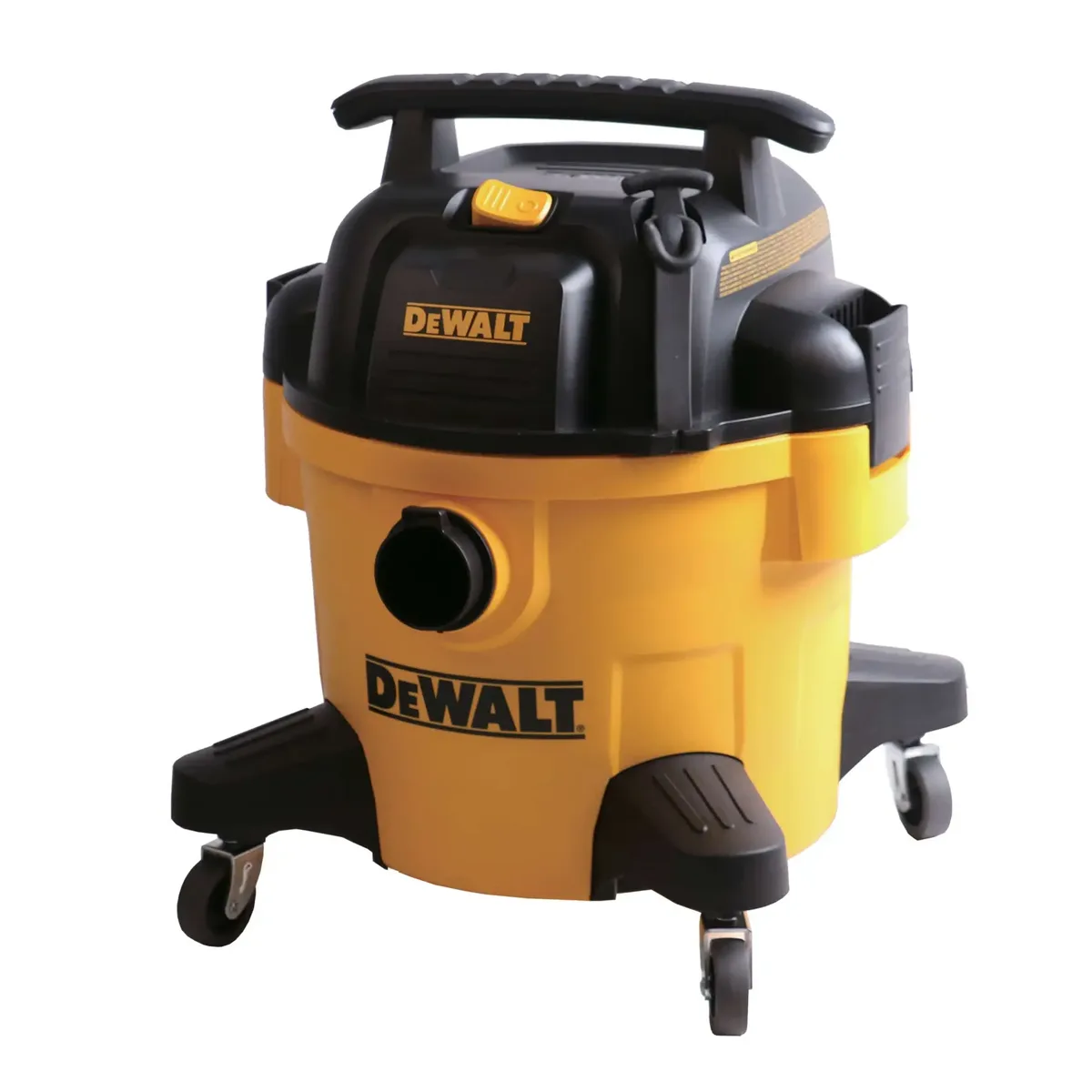
DeWalt 6 Gallon Poly Wet/Dry Vac
Buy the DeWalt 6 Gallon Poly at the same $75 for its 3-year warranty, reusable cartridge filter and published specs.
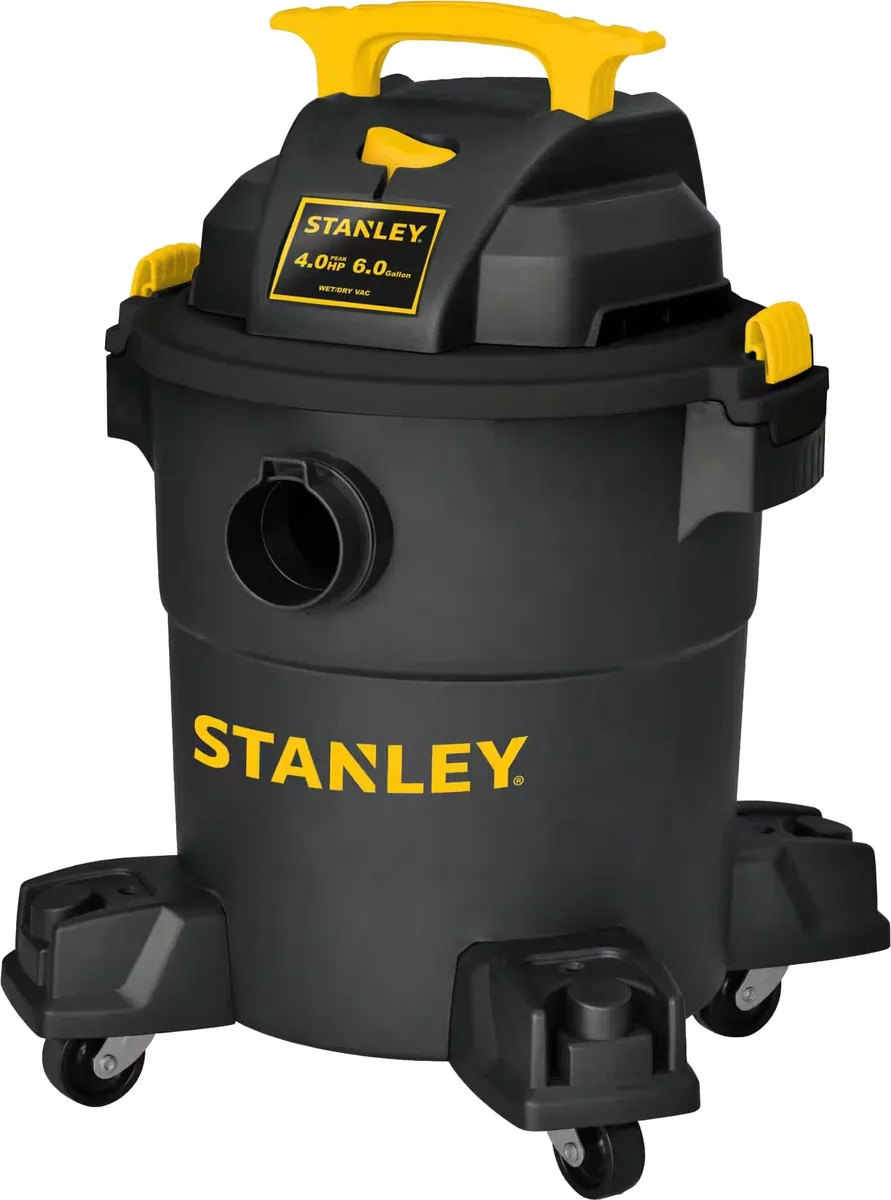
Stanley 6 Gallon 4 MAX HP Pro Wet/Dry Vacuum
Buy the Stanley 6 Gallon only if it is the one in stock or on sale well below the DeWalt, for occasional light DIY cleanup.
| Spec | DeWalt 6 Gallon Poly Wet/Dry Vac | Stanley 6 Gallon 4 MAX HP Pro Wet/Dry Vacuum |
|---|---|---|
| Price | ~$110 | ~$57 |
| Type | Wet-Dry Shop Vac | Wet-Dry Shop Vac |
| Suction | 4 HP | 4 HP |
| Battery | Corded | Corded |
| Navigation | — | — |
| Filtration | Washable and reusable cartridge filter | Foam filter |
| Cordless | No | No |
| Bagged | No | No |
| Noise | — | — |
| Dustbin | 6 gal | 6 gal |
| Water tank | — | — |
| Self-empty dock | No | No |
| Auto mop washing | No | No |
| Hot water washing | No | No |
| Obstacle avoidance | No | No |
| Carpet detection | No | No |
| Auto mop lifting | No | No |
| Multi-floor mapping | No | No |
| App control | No | No |
| Dimensions | 19.5 x 15.5 x 16.5 in | — |
| Weight | 14.8 lbs | — |
| Warranty | 3 years | 1 year |
Pros & cons
DeWalt 6 Gallon Poly Wet/Dry Vac
- ✓Under 15 lbs — easy to lift into a truck bed or up a step
- ✓Washable, reusable cartridge filter instead of disposable ones
- ✓Built-in blower port doubles as a basic blower
- ✓3-year limited warranty plus 1 year of free service
- ✓Rubberized casters roll easily on concrete and gravel
- ✓Widely stocked at Home Depot, so replacement filters and hoses are easy to find
- ✗No published noise rating
- ✗Some owners question whether the 4 HP figure reflects real running power
- ✗6 gallons fills up fast on bigger cleanup jobs
- ✗Running it without the filter seated will damage the motor — an easy mistake to make
Stanley 6 Gallon 4 MAX HP Pro Wet/Dry Vacuum
- ✓One of the cheapest shop vacs in this category, often under $80
- ✓Strong retailer review scores (4.6-4.7 stars) for basic DIY cleanup
- ✓Swiveling casters make it easy to move around
- ✓Rear blower port for clearing sawdust or leaves
- ✓Widely stocked at Home Depot, Walmart, and Best Buy
- ✗Some owners describe real-world suction as weaker than the 4 HP rating implies
- ✗Only a 1-year warranty, shorter than most competitors in this list
- ✗Foam filter's washability isn't specified by the manufacturer
- ✗No published noise rating, weight, or dimensions
- ✗Owners who compared it against Ridgid or DeWalt cited durability concerns
DeWalt 6 Gallon Poly Wet/Dry Vac vs Stanley 6 Gallon 4 MAX HP Pro Wet/Dry Vacuum: common questions
If they cost the same, why pick the DeWalt over the Stanley?▾
Warranty and filter. The DeWalt has a 3-year limited warranty plus 1 year of free service and a washable, reusable cartridge filter. The Stanley has a 1-year warranty and a foam filter whose washability is not specified.
Is 4 peak HP the same on both?▾
Both list 4 peak HP, but peak HP is measured at motor startup and is not sustained during use. DeWalt also publishes 80 CFM, while Stanley's own literature gives an inconsistent CFM range, so the HP figure alone does not settle which pulls harder.
What should I know before using the DeWalt?▾
Its owners warn never to run it without the filter seated, since that can damage the motor. They also note the poly tank is less abuse-resistant than DeWalt's steel models, which matters only for heavy daily commercial use.